
A Retail Chain That Opens Only Three Months a Year and Makes $1.5 Billion
Prologue: The “Ghost Store” Near My Home
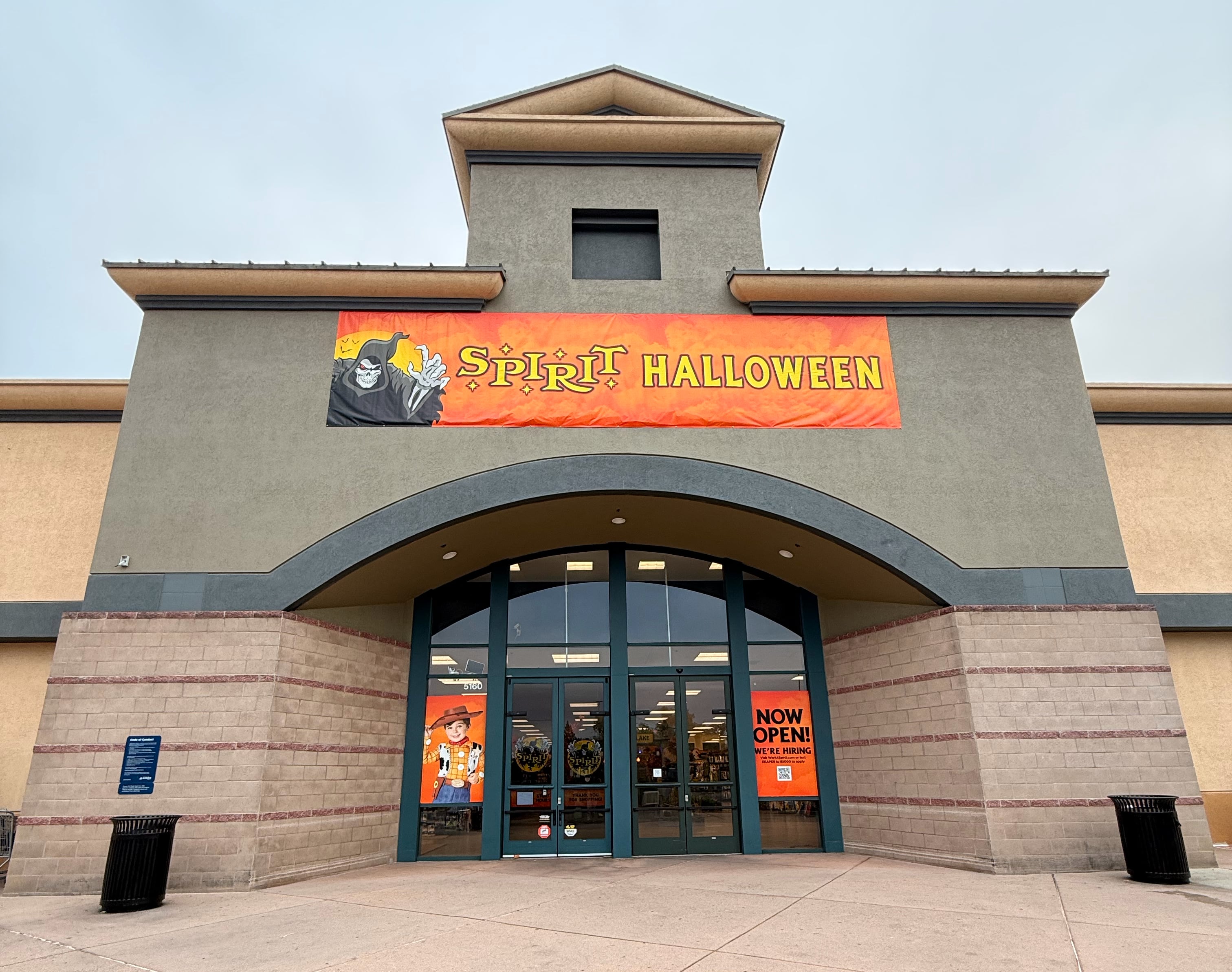
A Marshalls near my home closed. Not long after, an orange-and-black storefront appeared in the same spot, its doors plastered with “NOW OPEN” posters: Spirit Halloween.
Every time I drove past, I thought the same thing: this place probably won’t last six months.
Then I listened to a podcast and realized I’d gotten it completely backwards.
Spirit Halloween isn’t struggling to survive. It only plans to open for about three months. With more than 1,500 locations across the United States, it pulls in roughly $1.5 billion in revenue between late August and early November.
Three months. One and a half billion dollars. It’s not a failing retailer. It turned “temporary” into a business model.
A Pop-Up Retail Giant
Spirit Halloween sells everything Halloween: costumes, masks, skeleton props, pumpkin lights, lawn decorations. Americans take Halloween seriously—whole neighborhoods compete to see who can build the scariest front-yard display. I’ve heard of streets where people put full pirate ships on their lawns and hire actors to wander around dressed as zombies. It feels like a theme park haunted house, except it happens in a residential neighborhood.
The company operates only during this one season. Once the window between August and October closes, the shelves, posters, lights, and plastic monsters are all torn down within a few days. The building is left empty and unbranded, as if the store had never existed.
And yet, that tiny window is enough to build something massive.
Its Real Skill Isn’t Selling—It’s Salvaging
The founder, Joseph, started in 1983 with a women’s clothing store. When he tried selling Halloween gear that year, the results were promising. The next year, he made around $100,000 between August and October. That’s when he realized the opportunity wasn’t just the products—it was the real estate.
Spirit Halloween has an unusual and surprisingly powerful core competency: finding large, well-located spaces left behind by failed retailers.
- Bankrupt Bed Bath & Beyond stores
- Shuttered Toys “R” Us locations
- Struggling big-box gyms
- Even churches
These places share one trait: they sit in decent locations with real foot traffic, but the previous tenant couldn’t make it work. As the podcast put it: a store closing doesn’t mean the location is dead.
Spirit Halloween specializes in reigniting someone else’s failure. Its site-selection logic is blunt: within five to eight kilometers, there should be around 35,000 residents; nearby roads should carry about 25,000 vehicles per day; and the space itself should be at least 5,000 square meters. It doesn’t need a permanent sign, expensive build-out, or long-term lease. It just needs a high-traffic box that’s temporarily empty.
This isn’t retail. It’s real estate arbitrage.
Why Would a Landlord Rent to Them?
A three-month lease sounds risky, but Spirit Halloween removes almost every landlord objection:
- Pays 70% of rent upfront. A May signing means cash flow by October.
- Takes the space as-is. Gyms, churches, old supermarkets—if it has power, water, and HVAC, they can work with it.
- Builds in a week, tears down in days. Highly efficient; the space is returned clean after the lease ends.
- Covers its own utilities, trash, and insurance. The landlord collects rent without operational headaches.
- Landlords can cancel if they find a long-term tenant. If Walmart signs on before June, the Spirit Halloween contract can be torn up.
- Targets the gap between tenants. When one tenant leaves in March and the next one is still waiting for permits, landlords have months of zero income. That gap is when Spirit Halloween’s offer becomes hard to refuse.
Combined, these terms make Spirit Halloween a kind of scavenger of commercial real estate ruins.
Product Strategy: Turning One-Time Sales Into an Annual Cycle
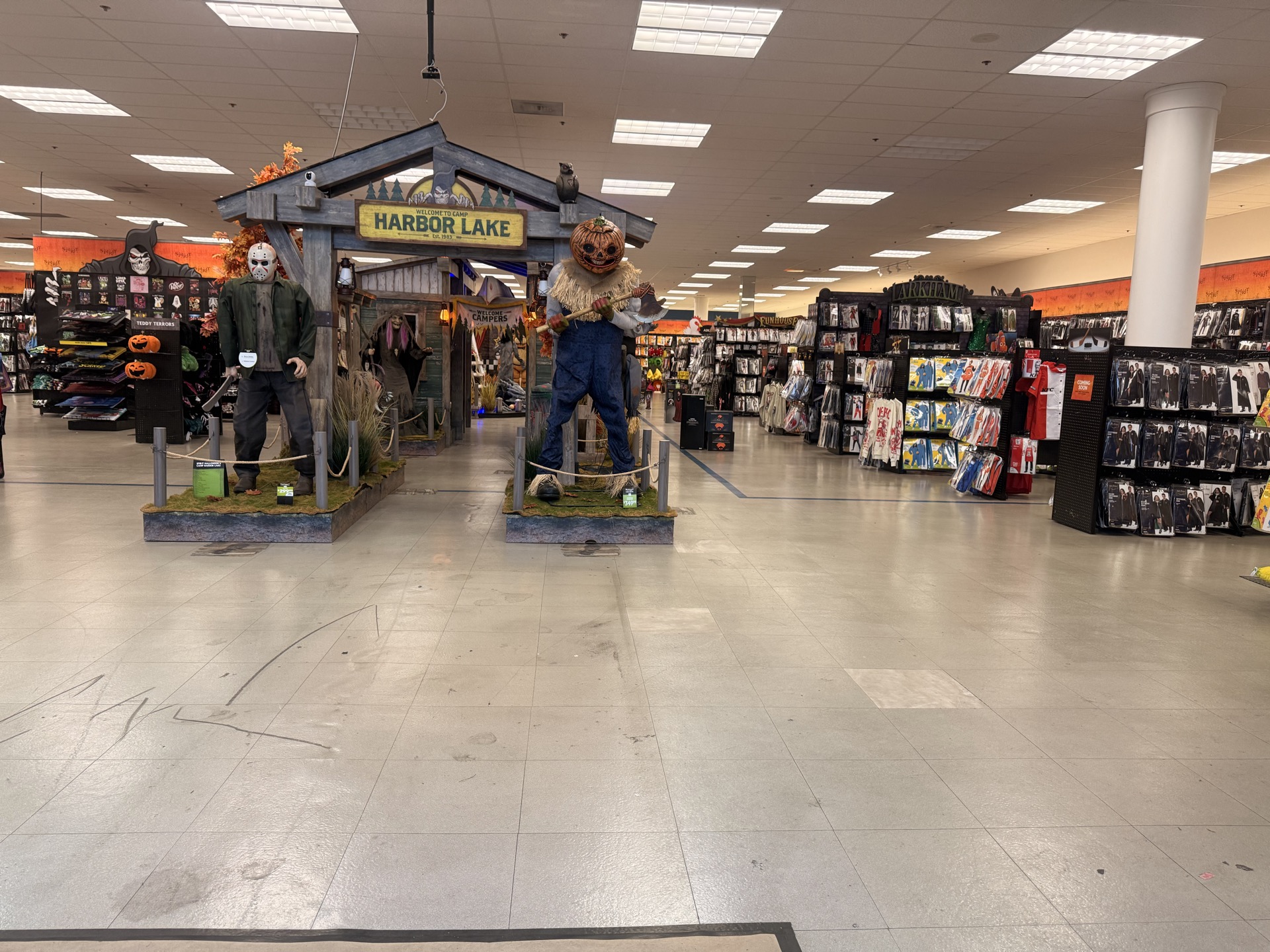
Spirit Halloween’s product strategy is just as clever. Roughly 30–40% of its inventory is evergreen—witch brooms, witch dresses, zombie masks. These items don’t change much from year to year and can be reused the following season.
The remaining 60–70% chases the current year’s trends: movie characters, TikTok memes, viral moments. Early on, the company couldn’t afford major IP licenses, so it used cheeky, borderline names. “Factory Owner” nudged at Willy Wonka. “Alad in a Costume” dropped one letter from Aladdin. “Psychic Bros” winked at the Mario brothers.
The marketing is equally unorthodox. Many Spirit Halloween memes online originate from fans, but the company actively fans the flames. When the U.S. government briefly “shut down,” the brand Photoshopped its banner onto the White House, pretending it had moved in. That willingness to play along gives the brand organic reach.
The Deeper Lesson: The Location Didn’t Fail—The Business Model Did
The most striking idea from the podcast is this: we tend to confuse a store’s failure with a location’s failure.
When I saw Marshalls leave, my instinct was to assume the area had lost its commercial appeal. Spirit Halloween’s logic is the exact opposite: because someone failed here, there’s an opportunity to prove the location still has traffic. The previous business model just didn’t fit.
Toys “R” Us didn’t collapse because no one lived nearby. Bed Bath & Beyond didn’t leave because the neighborhood disappeared. The consumers are still there; those companies simply failed to give people a reason to walk through the door.
Spirit Halloween succeeds because it uses a seasonal, high-ticket, low-fixed-asset model to validate and extract the value of those underestimated locations.
Of course, the model has limits. The podcast mentioned attempts to expand into Christmas (Spirit Christmas) and geographically into markets like Mexico’s Día de los Muertos. Stretching the season from one holiday to another changes supply chains, product cycles, and lease economics. It’s not trivial.
But at the very least, Spirit Halloween changed how I look at that three-month store near my house. It’s not short-lived because it can’t survive. It’s short-lived because that’s precisely why it thrives.
Closing Thought
Next time you see an old store close and nothing immediately replace it, don’t rush to conclude that “this place is finished.”
Maybe the right business model just hasn’t shown up yet.
Maybe in three months, it will reappear in a completely different form.
Related posts