

Dalio’s Warning: Five Forces Reshaping the World Order and How to Defend
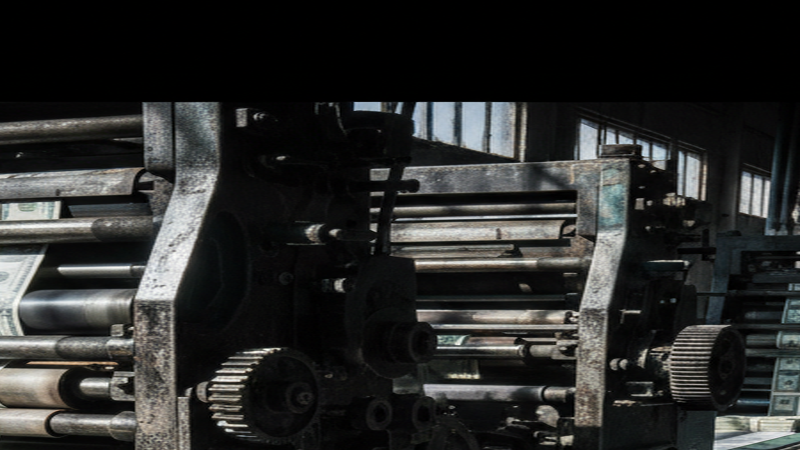
The machine works like this: when debt grows faster than income, the system eventually reaches a breaking point. Dalio describes this as a perpetual motion machine where every action triggers a reaction.
The current numbers are stark. US federal debt has surpassed $36 trillion, with annual interest payments approaching $1 trillion—roughly equal to the entire defense budget. The deficit-to-GDP ratio stands at 7.5%, a level Dalio says must shrink to 3% to avoid systemic collapse.
“Waiting too long is like ignoring plaque buildup until a heart attack occurs,” Dalio told CNBC in February 2025. The prescription is straightforward but politically painful: a combination of spending cuts, tax adjustments, and debt restructuring.

Dalio’s framework identifies three overlapping cycles: the internal order cycle (now in Stage 5 of 6), the external geopolitical cycle (the end of American unipolar dominance), and the long-term debt cycle (80 years into the current iteration that began after World War II).
The internal cycle is perhaps most concerning. Dalio divides it into six stages:
- New order established
- Resource allocation systems built
- Peace and prosperity
- Excessive spending, inequality rises
- Fiscal crisis, intense conflict ← America is here
- Civil war or revolution (30% probability within a decade)
“The world order has changed numerous times in the past and will continue to do so,” Dalio argues in Principles for Dealing with the Changing World Order. The question is not whether change comes, but whether you’re positioned to survive it.

Dalio calls AI “the largest industrial revolution in human history”—larger than the printing press and the original industrial revolution combined. Why? Because it acts directly on “all thinking processes,” reshaping cognition and decision-making.
The irony is double-edged. AI can dramatically boost productivity, but it can also accelerate the wealth concentration that Dalio identifies as a key driver of internal disorder. In his DOAC podcast interview (September 2025), he warned that 20% of jobs could be displaced by 2030, including traditionally “safe” high-skill professions.
For Dalio, AI is a “national-level war” whose outcome determines global economic and military dominance. The US leads in foundational research (large model algorithms, quantum computing), but China’s advantages in manufacturing-scale deployment and policy coordination create a genuine competitive threat.
The All Weather Portfolio: Dalio’s Defensive Blueprint
Dalio’s most concrete investment prescription is his “All Weather” portfolio, designed to perform across all economic environments:
| Asset Class | Allocation | Role |
|---|---|---|
| US Stocks | 30% | Growth engine |
| Long-term Bonds | 40% | Deflation hedge |
| Intermediate Bonds | 15% | Diversification |
| Commodities | 7.5% | Inflation hedge |
| Gold | 7.5% | Crisis hedge |
But the community has sharp criticism. The FIRE community on Reddit (r/FIREUK) and ERN at Early Retirement Now point out that the portfolio’s heavy bond weighting “robbed Peter to pay Paul”—performing brilliantly in the 1929 crash but suffering terribly in the inflationary 1970s and during 2022 when everything correlated downward simultaneously.
“Both AW portfolios have some of the worst failure rates for the 4% Rule I’ve ever seen,” ERN concluded after extensive backtesting. “The bigger the bond exposure, the worse the pain during the inflationary 1970s.”
What Silicon Valley Should Actually Do
Beyond Dalio’s template, here’s a practical defensive framework for technology workers and entrepreneurs in the current cycle:
1. Gold (10-15%): Dalio’s most consistent recommendation. Physical gold if possible (GLD or IAU as alternatives). This allocation has survived every crisis from 1929 to 2008.
2. TIPS and Short-Term Treasuries (10-15%): Inflation protection + liquidity. In a debt monetization scenario, nominal bonds get crushed but TIPS maintain purchasing power.
3. International Diversification (10-20%): Dalio’s “three caves” principle (狡兔三窟). European and Asian market ETFs reduce single-country concentration risk.
4. Cash Buffer (5-10%): 3-6 months of expenses in T-bills. Crisis survival + optionality for buying opportunities when markets crash.
5. Skills as Anti-Fragile Assets: The one asset that cannot be confiscated or inflated away. AI literacy, cross-domain expertise, and the ability to navigate uncertainty.
6. Income-Producing Real Assets: Rental properties in stable markets, farmland, or infrastructure—assets with cash flow that adjusts with inflation.
Ray Dalio’s five forces framework is drawn from his LinkedIn series “How Countries Go Broke” (January 2025), his HBR podcast interview (January 2026), and the DOAC podcast with Steven Bartlett (September 2025). Portfolio criticism sourced from Reddit r/FIREUK and Early Retirement Now (ERN).
Related posts